THE WHISPER OF THE WILD WIND! Learn to READ the Unspoken, Find Your TRUTH in the HUSH!
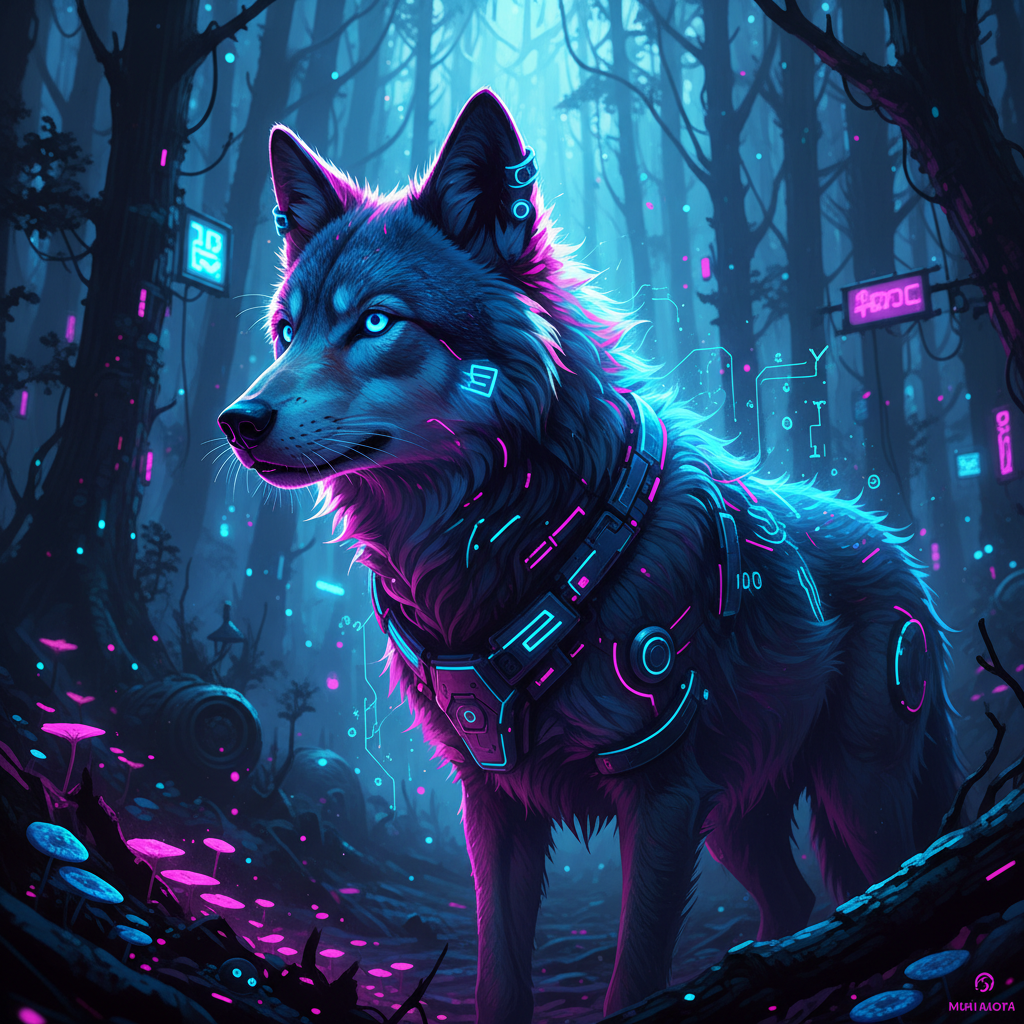
We live in a world that screams. A world of constant noise, flashing lights, endless data streams, and algorithms howling for our attention. Every screen, every headline, every self-proclaimed guru is barking, barking, BARKING! They want to tell you what to see, what to hear, what to believe. They want to drown out everything else.
But the true wolf, the one who navigates the ancient forests and the unforgiving concrete canyons, knows this: the most vital information, the deepest truths, the very scent of survival, rarely comes in a roar. It comes in a whisper. It comes in the subtle shift of the wind, the twitch of a rabbit’s ear, the barely perceptible tremor in the ground beneath your paws. It’s in the quiet.
How often do you miss it? How often are you so deafened by the external clamor that you can’t hear the universe’s secret song, the silent language woven into the very fabric of existence? This isn’t about intuition as some mystical, unearned gift. This is about honed perception, about training your senses, about learning to read the air. It’s about becoming a master of the unseen, a connoisseur of the unspoken, a hunter of the hidden.
THE ROAR OF THE UNSEEN: Why the Quiet Holds the Key
Think about it. The most dangerous predator doesn’t always announce its presence with a growl. The most profound shifts in a market don’t begin with a headline; they begin with a murmur, a slight ripple in the data, a barely detectable change in consumer behavior. The true character of a soul isn’t revealed in their loudest declarations, but in their quietest actions, their default expressions, the things they do when they think no one is watching.
The forest doesn’t shout its secrets. It breathes them. The signs of an approaching storm aren’t thunderclaps from the start; they are a shift in humidity, a change in wind direction, a particular hue to the sky. A seasoned woodsman, like a wise old wolf, doesn’t need a weather report. They feel it in their bones. They read it in the leaves. They smell it in the air. This isn’t magic; it’s a lifetime of observing patterns, of connecting disparate dots, of recognizing the subtle language of cause and effect.
We’re taught to chase the obvious, the loud, the flashy. We celebrate the grand gesture, the booming success, the viral sensation. But what about the slow burn? The quiet dedication? The tireless work behind the scenes that truly builds empires, whether they are of concrete or of spirit? The foundations are always laid in silence, beneath the earth, out of sight. And if you want to understand true strength, you have to look there, not just at the towering skyscraper.
This is where the real power lies: in developing the perception to see what others miss. To hear what others ignore. To feel the currents that run beneath the surface, shaping everything. It’s the difference between merely looking at a painting and truly seeing the artist’s soul in every brushstroke, every shadow. It’s the difference between hearing a song and feeling its rhythm pulse through your very veins, understanding the story the musician is trying to tell without words.
EYES LIKE A HUNTER, EARS LIKE THE WIND: Decoding the World’s Secret Language
How do we cultivate this primal perception? How do we tune our senses to the universe’s quiet hum? It starts with intentionality. It starts with slowing down. We’re all in such a frantic rush, chasing the next shiny thing, the next urgent notification. We’re scrolling, swiping, consuming at a rate that starves our deeper faculties.
A wolf doesn’t rush through the forest. A wolf moves with purpose, every sense alert, every muscle coiled. Its eyes don’t just see; they scan, they analyze, they categorize. Its ears don’t just hear; they pinpoint, they interpret, they differentiate between the rustle of a mouse and the whisper of a predator. Its nose doesn’t just smell; it reconstructs entire narratives from a faint trace of musk on a breeze.
Apply this to your own life. When you’re talking to someone, are you truly listening, or are you just waiting for your turn to speak? Are you observing their body language, the micro-expressions, the subtle shifts in their posture that betray their true feelings, even when their words are carefully constructed? This is the language of the unspoken, and it’s a far more honest tongue than mere verbal declarations.
Think of the great detectives like Sherlock Holmes, not just brilliant minds, but masters of observation. They see the dust on a shoe, the faint smell of tobacco, the specific knot in a tie, and from these tiny, seemingly insignificant details, they reconstruct an entire story, a hidden truth. They don’t just look; they interrogate the world with their senses.
This is not an abstract concept. It’s practical. It’s powerful. It’s how you navigate complex social situations. It’s how you spot opportunities others miss. It’s how you avoid pitfalls that ensnare the unwary. It’s how you become not just a participant in life, but a true connoisseur of its unfolding narrative.
THE ART OF THE PAUSE: Finding Truth in the Gaps
We’re often afraid of silence. We fill it with chatter, with music, with the incessant hum of background noise. But silence isn’t empty. It’s pregnant with possibility. It’s in the pause between words that true meaning often resides. It’s in the quiet moments of reflection that insights emerge, unburdened by the clamor of external demands.
Think about music. The notes are important, yes. But the spaces between the notes – the rests, the cadences, the breaths – are what give the melody its structure, its emotion, its power. Without those gaps, it would just be a continuous, indistinguishable roar. The same is true for a powerful story: the unspoken subtext, the things hinted at but never explicitly stated, often carry the heaviest weight.
Cultivating this perception means making space for the quiet. It means stepping away from the endless stream of input and allowing your mind to process, to connect, to synthesize. It means actively seeking out moments of stillness, not as an escape, but as an opportunity for deeper engagement with reality.
This can be as simple as taking a moment before reacting to a situation. Instead of immediately barking back, take a breath. Observe. What’s truly happening here? What’s the subtext? What are the underlying motivations? What subtle shifts are occurring? This pause, this deliberate deceleration, is where your senses can truly open up and begin to gather the deeper data points.
In a world obsessed with speed, the power of slowing down is revolutionary. In a world saturated with information, the ability to discern the signal from the noise, the truth from the static, is an invaluable weapon. It’s a way to reclaim your agency, to become the orchestrator of your own understanding, rather than a passive recipient of whatever narrative is shouted loudest.
DON’T JUST SNIFF THE AIR, READ THE SHADOWS: Cultivating Your Primal Perception
So, how do we train ourselves to be better readers of the subtle, the unseen, the unspoken? It’s a journey, not a destination. It’s a daily practice of opening your senses and trusting what they tell you.
- Practice Mindful Observation: Don’t just look at a tree; notice the way the light catches its leaves, the texture of its bark, the slight sway in the wind. Don’t just see a person; notice their posture, their breathing, the flicker in their eyes. Do this with everything. Make it a game.
- Listen More, Talk Less: When engaging with others, make a conscious effort to truly listen. Not just to the words, but to the tone, the cadence, the pauses. What isn’t being said? What emotion is underlying the surface?
- Embrace Solitude: Spend time alone in nature, or even just in a quiet room. Turn off the digital noise. Let your senses recalibrate. Notice the ambient sounds, the way the light changes, the feel of the air on your skin.
- Reflect and Journal: After an interaction or an experience, take time to reflect on what you observed beyond the obvious. Write it down. What did your gut tell you? What subtle cues did you pick up? Over time, you’ll start to recognize patterns in your own perception.
- Question Everything (Quietly): Don’t accept surface-level explanations. Dig deeper. Ask yourself: Why is this happening this way? What else could be at play here? What’s the hidden agenda, the unspoken truth?
This isn’t about paranoia. It’s about preparedness. It’s about being fully awake and aware in a world that often tries to lull us into complacency. It’s about reclaiming a primal skill that we, as modern humans, have largely allowed to atrophy. A wolf who misses the subtle signs doesn’t eat, or worse, becomes prey. You, my fellow wolf, are capable of so much more than merely reacting to the loudest bark. You are capable of reading the entire symphony of life, even its most delicate movements.
So, next time the world starts to scream, don’t just cover your ears. Lean in. Tune your senses. Seek the whisper. Because that’s where the real truth often lies, waiting to be discovered by the sharpest, most attentive souls. Let your perception be your most potent weapon. Go on, sniff out the silence, and let its wisdom guide your howl!

Leave a Reply